HOWO Electric Trucks: A Buyer’s Guide for Export Fleets
Most fleet operators do not switch to electric because they believe in it. They switch because a specific route stopped making money on diesel, and they need to know whether HOWO has an answer for that route.
This guide is written for buyers who already run HOWO — or are close to it — and want to understand what the electric line-up does well, what it does not, and what to check before signing.
Why Existing HOWO Fleets Test Electric First
Three practical reasons, none of them environmental.
The parts pool is already there. A fleet running HOWO diesel units has established a supply line for filters, brake components, cab parts and driveline consumables. An electric HOWO shares more of that pool than a different brand would. The battery and motor are new; the chassis, cab and running gear are not.
Driver familiarity transfers. The cab layout, the controls and the visibility are recognisable. A driver who has spent five years in a HOWO diesel unit needs a short briefing, not retraining.
The resale market exists. If the electric unit does not work out on a route, the chassis has a second life. That is not true of every brand in this segment.
The Current Line-up
The current range covers HOWO tractor trucks and HOWO dump trucks in 6×4 and 8×4 configurations. Electric HOWO models are configured to order, so treat the figures below as typical ranges rather than a fixed catalogue. Final specification depends on battery supplier, axle configuration and destination market.
| Configuration | Typical battery | Loaded range (typical) | Where it fits |
|---|---|---|---|
| 6×4 electric tractor | 350–400 kWh | 200–280 km | Port drayage, container shuttles, plant transfer |
| 8×4 electric tractor | 400–500 kWh | 180–240 km | Heavier haul, longer fixed cycles |
| 6×4 electric tipper | 350–420 kWh | 150–220 km | Mine haul roads, quarry cycles, urban construction |
| 8×4 electric tipper | 400–500 kWh | 140–200 km | High-volume aggregate, short steep grades |
Two notes that matter more than the table:
Range falls faster on gradients than on distance. A 12 km climb at 8% costs more energy than 40 km of flat road. Quote range against your actual profile, not the brochure figure.
Battery capacity is not the same as usable capacity. Expect a state-of-charge buffer at both ends. A 400 kWh pack does not deliver 400 kWh to the wheels.
What the Parts Network Actually Buys You
This is the part buyers underestimate, and it is the single strongest argument for staying with HOWO.
An electric truck that breaks down on a mine haul road is not waiting for a battery — it is usually waiting for a contactor, a coolant pump, a DC-DC converter or a sensor. Those parts are small, cheap and impossible to substitute.
Fleets that buy a brand new to their market spend the first year discovering which of those parts they should have stocked. Fleets already running HOWO start with a supply relationship and a rough idea of lead times.
Before the first unit ships, order a kit: brake chambers, filters, a contactor set, a coolant pump, a DC-DC module and the high-voltage fuses. The freight for one small part usually costs more than the part.
Charging and the Duty Cycle That Fits
Most fleets in our markets start with a single DC charger at the depot and one shift on the electric unit.
A 350–400 kWh pack charged overnight at 120 kW covers a normal single-shift duty cycle with margin. That is the configuration that works, and it is the one to plan around.
The common mistake is buying a bigger battery to avoid installing a second charger. A larger pack adds cost, weight and payload loss; a second charger adds flexibility. If the route genuinely needs two shifts, price the charger before the battery.
Also confirm the connector standard against your country before shipment. CCS2 and GB/T are both available, and retrofitting after arrival is expensive and slow.
Matching a HOWO Tractor to the Right Trailer
An electric tractor is half a vehicle. The trailer decides whether the combination earns.
Three pairings cover most export orders:
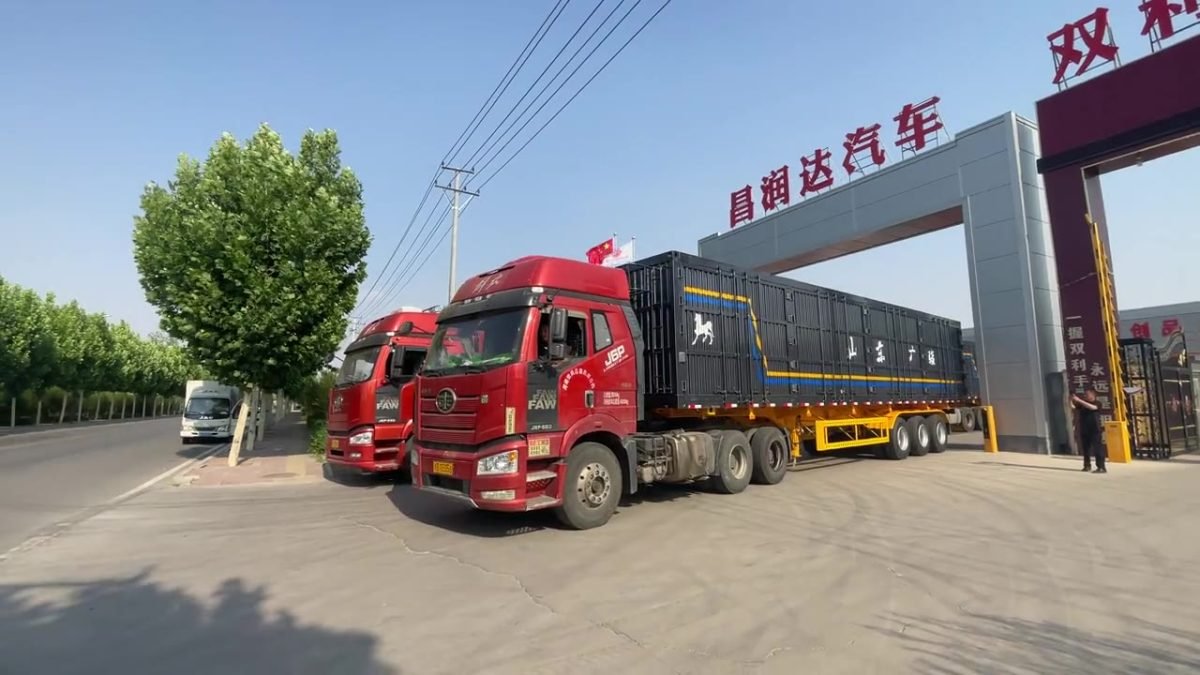
Tractor plus container chassis or flatbed for port and terminal work. Volumetric cargo, so battery mass rarely limits payload. This is the lowest-risk first order.
Tractor plus lowbed for plant and equipment movement between sites. Short daily distances and heavy loads suit electric well; check ramp angle against the machines you actually move.
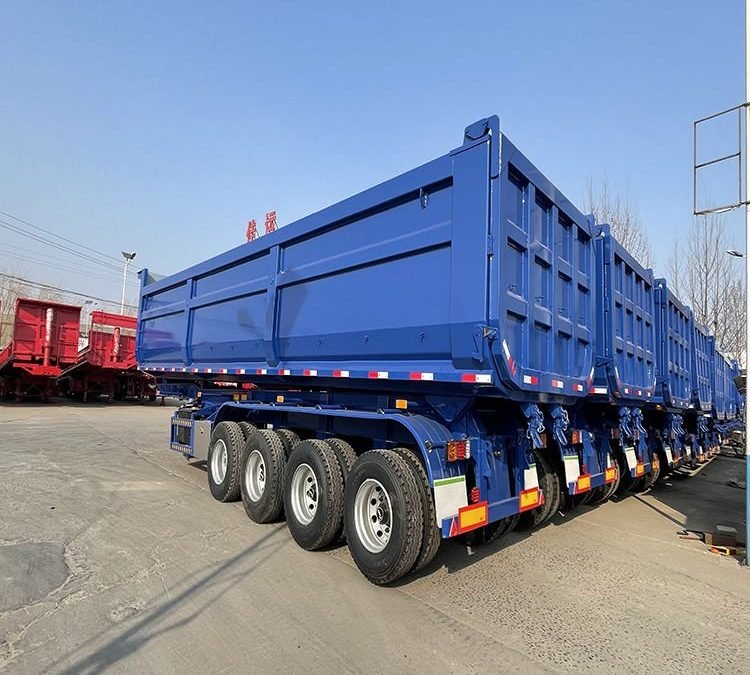
Tipper with side-tipping or end-dumping body for aggregate and construction. Payload-sensitive, so specify lightweight body steel and verify axle loads with a full battery.
Whichever combination you choose, measure the loaded fifth wheel height on the actual tractor before the trailer drawing is released. A howo trailer ordered at the same time as the tractor can be specified against that measured height, which removes most of the guesswork. A trailer built to a diesel-era height will wear tyres unevenly within a few thousand kilometres, and the cause is rarely obvious after the fact.
First-Year Issues Worth Knowing
These are the recurring items we see on electric HOWO units in hot, dusty markets. None are design failures; all are specification decisions, and every unit we ship goes through the same quality control process.
- Cooling. High ambient temperatures plus sustained grade work stress the battery and motor cooling loop. Specify the high-temperature package for savannah and desert operation.
- Dust ingress. Seals and breathers on the high-voltage enclosures need upgrading for unpaved haul roads. This is the most common cause of early warning lights.
- Regen calibration. Drivers coming from diesel expect engine-brake behaviour. A short calibration session prevents over-reliance on the brake pedal and extends chamber life.
- Tyre specification. Battery mass changes axle loading. Re-check the tyre rating against the loaded axle weight, not the tractor’s kerb weight.
How It Compares With the Alternatives
Buyers rarely choose in isolation. The usual shortlist is HOWO and SHACMAN plus FOTON, and the honest comparison is not about which truck is best — it is about which one your route and your parts supply can support.
HOWO’s advantage is network depth in Africa and the Middle East. SHACMAN competes on frame strength and payload. A foton heavy truck typically lands at a lower unit price for equivalent battery capacity, which suits a first unit on a test route.
If the electric numbers do not work for a particular route yet, a used howo truck for sale remains a rational bridge — it adds capacity without a new-unit lead time, and it holds value in markets where charging is still being built. Most fleets in 2026 end up running both.
FAQ
Is a heavy duty truck for Africa realistic on electric today?
On fixed mine, port and construction routes with depot charging, yes. On long intercity corridors without reliable charging, not yet. The route decides, not the truck.
What warranty applies to the battery?
Battery warranty terms are set per order and per market, and they are usually expressed in years or charge cycles, whichever comes first. Ask for the terms in writing before the deposit — they are not uniform across destinations.
Can the same workshop service both diesel and electric HOWO?
Mechanically, yes. High-voltage work requires trained technicians and insulated tooling. Plan for at least one trained technician per site, and ask for training at delivery.
How long from order to delivery?
Standard configurations typically ship within a few weeks of specification sign-off. Custom bodywork and CKD packing add time before production starts.
Next Step
Send the route profile — distance, payload, gradient and shift pattern — to our export team and we will tell you honestly whether an electric HOWO fits it, and what the trailer needs to match.
WhatsApp: +86 133 5510 0219 Email: weierxin@wrxtruck.com